Solid Snake (low, gravelly voice): “They say the second coming isn’t fire and brimstone… it’s one man. One soldier. Standing alone against a Satanic horde. No armies. No governments. No backup. Just him.
Even his own brothers don’t believe. They call him a fool, a madman chasing ghosts. But the truth? Faith isn’t about belief when it’s easy. Faith is standing in the fire when the world calls you insane.
I’ve seen the darkness in men’s hearts. The greed. The cruelty. The hunger for power that turns brother against brother. That’s the true face of the horde. And I know… one man can’t stop it. Not really.
But maybe… just maybe… one man can buy enough time. Enough hope. Enough light… for the rest of us to remember what we’re fighting for.”
(Snake exhales, lights a cigarette, the glow flickering against the shadows.) “One man against hell itself. Sounds like suicide. But hell’s never met me.”
The old man’s hands rested on the arms of his chair, a pair of gnarled artifacts. They were more than hands; they were the legacy of a life spent in the cold, wet cathedral of British Columbia’s forests. Ned Jukic. Tree faller. Our father. The room, his East Van house filled with the smell of pine and slow-cooked pork, seemed to hold its breath around him.
Bruno, ever the bulldog, had circled back to his argument. He needed our father’s blessing, his confirmation that the world was a brutal, simple place.
“It’s what you lived, Tata,” Bruno said, his voice earnest. “In the woods. It’s the purest form of it. The chain breaks, the tree kicks back, the man who isn’t strong enough, isn’t fast enough… he’s gone. It’s nature. No excuses. Survival of the fittest.”
Ned’s pale, watery eyes, set deep in a face cross-hatched with scars from flying splinters and branches, watched the fire. He was a man of few words. Words were cheap in the woods. Action was everything.
He took a slow sip of his whisky, not the rakija we drank, but good Canadian whisky. He savored it, letting Bruno’s words hang in the air like wood dust after a fall.
“Survival of the fittest,” he finally repeated, his voice a low gravelly rumble, like the sound of a far-off skidder. “This is what you think I learned?”
Bruno nodded, confident. “It’s what you taught us. To be tough.”
Ned set his glass down with a deliberate thud. “I taught you to be tough. I did not teach you to be stupid.” His eyes, sharp as a saw’s tooth, locked onto Bruno. “The forest is not a philosophy lesson for boys in a warm room. It is a place of death. And the first thing you learn is that you are not fit. None of us are.”
He leaned forward, his large frame still imposing. “You think the strongest man always wins? The strongest man gets confident. He gets lazy. He misses the rot in the heartwood. The fittest man is not the one with the biggest muscles. He is the one with the sharpest eyes. The one who knows when to run. The one who listens to the man next to him, even if that man is small, or quiet, or scared.”
He gestured out the window toward the North Shore mountains, invisible in the rain and dark. “I saw a man, big like a bear, pull a saw through a cedar like it was butter. He was strong. The fittest. He didn’t see the widowmaker tangled in the canopy. It killed him. I saw a small man, a nervous man, who jumped at every crack. He was weak, by your measure. But he is alive today because he was afraid. His fear made him careful. His weakness was his strength.”
His gaze then shifted to Luka, on the floor, his entire being focused on the geometric perfection of his blocks.
“You look at that boy and you see a weak tree,” Ned said, his voice dropping, becoming something more terrifying than a shout. “I look at him and I see a man who notices things. A man who sees the patterns the rest of us are too loud to see. In the woods, he is the one you want on your side. He is the one who sees the lean of the tree you missed. He hears the creak that signals the fall.”
He picked up his whisky again, his wrecked hands cradling the glass with a surprising tenderness.
“A logging crew is not an army of one man. It is a body. The faller is the heart. The choker setter is the nerves. The whistle punk is the voice. The weak link? There is no weak link. There is only a chain. And the chain is only as strong as the crew that cares for it.”
He finished the whisky in one swallow and fixed Bruno with a look that could fell a tree.
“You want to talk about fitness? About strength? The strongest thing a man can do is not break something. It is to mend something. It is to look at what is broken and see not a problem to be disposed of, but a thing to be fixed. To be cherished.”
He nodded toward Luka. “That is your crew, Bruno. That is your chain. You do not leave him behind. You listen for his song. Because his song might just save your life one day.”
Silence. The only sound was the rain and the soft click-click of Luka’s blocks.
Ned Jukic had spoken. The argument was over. The law had been laid down, not from a philosophy book, but from the woods.
The silence after our father’s words was total, broken only by the spit of the fire and the rhythmic tick-tick-tick of Luka’s blocks finding their perfect place. Ned Jukic had laid down the law of the woods, and it was a law of community, not cruelty.
Bruno stared into his glass, chastened but not yet converted. The old ideas ran deep.
I couldn’t let it rest. Not now. The clarity was too sharp, the stakes too high.
“Tata is right,” I said, my voice cutting through the quiet. I looked at my brother, my gaze hard. “But you need to hear it in terms you think you understand, Bruno. You talk about Croatia. You want a strong Croatia. Good. So do I.”
I stepped into the center of the room, feeling the eyes of my family on me.
“But the Croatia we build will not be some shitty Spartan war-camp,” I said, the profanity cracking through the room’s formality. “It will not be a remake of that damn *300* movie you love so much, where the king tosses a baby off a cliff because it might not hold a shield one day.”
Bruno’s head snapped up, a defensive glare in his eyes.
“That is a pagan fantasy! A death cult!” I continued, my passion giving the words heat. “Is that what we are? Pagans? Are we a people who worship the state, who worship strength, above the soul? Above Christ?”
I pointed at the crucifix hanging on my father’s wall, a simple, wooden thing. “Croatia is a Christian country. Or have you forgotten that? The first lesson of our faith is not conquest. It is compassion.”
I turned and swept my arm toward Luka, a gesture of presentation, of reverence.
“The Christian model is not a weak model. It is the hardest model there is! It is easy to dispose of a broken child. It is easy to only cherish the strong. Any animal can do that. It takes a beast to leave its wounded behind. It takes a man—it takes a Christian—to bind up the wounds of the broken. To carry them.”
My voice dropped, but it lost none of its intensity.
“We are not building a war machine, Bruno. We are building a nation. A home. A republic. And a home is judged not by the strength of its strongest son, but by its care for its most vulnerable. A country that disposes of its Lukas is a country that has already lost its soul. It is a country that has sold its cross for a sword and its soul for a propaganda poster.”
I looked from Bruno’s shocked face to my father’s, and saw a grim approval in the old man’s eyes.
“I am going back to help build a republic,” I said, my final word on the matter. “And I will build it on the principle that every single Croat has worth. Not because they can hold a weapon, but because they bear the image of God. Even if that image is reflected in a different, more beautiful way.”
I walked over to Luka and knelt. I didn’t touch his city. I just looked at it.
“This,” I said softly, to everyone and no one. “This precision. This order. This is not a weakness. This is the mind that could design a cathedral, or write a symphony, or find a cure for a plague. This is what we cherish. This is Croatia. Not the cliff where we throw our children away.”
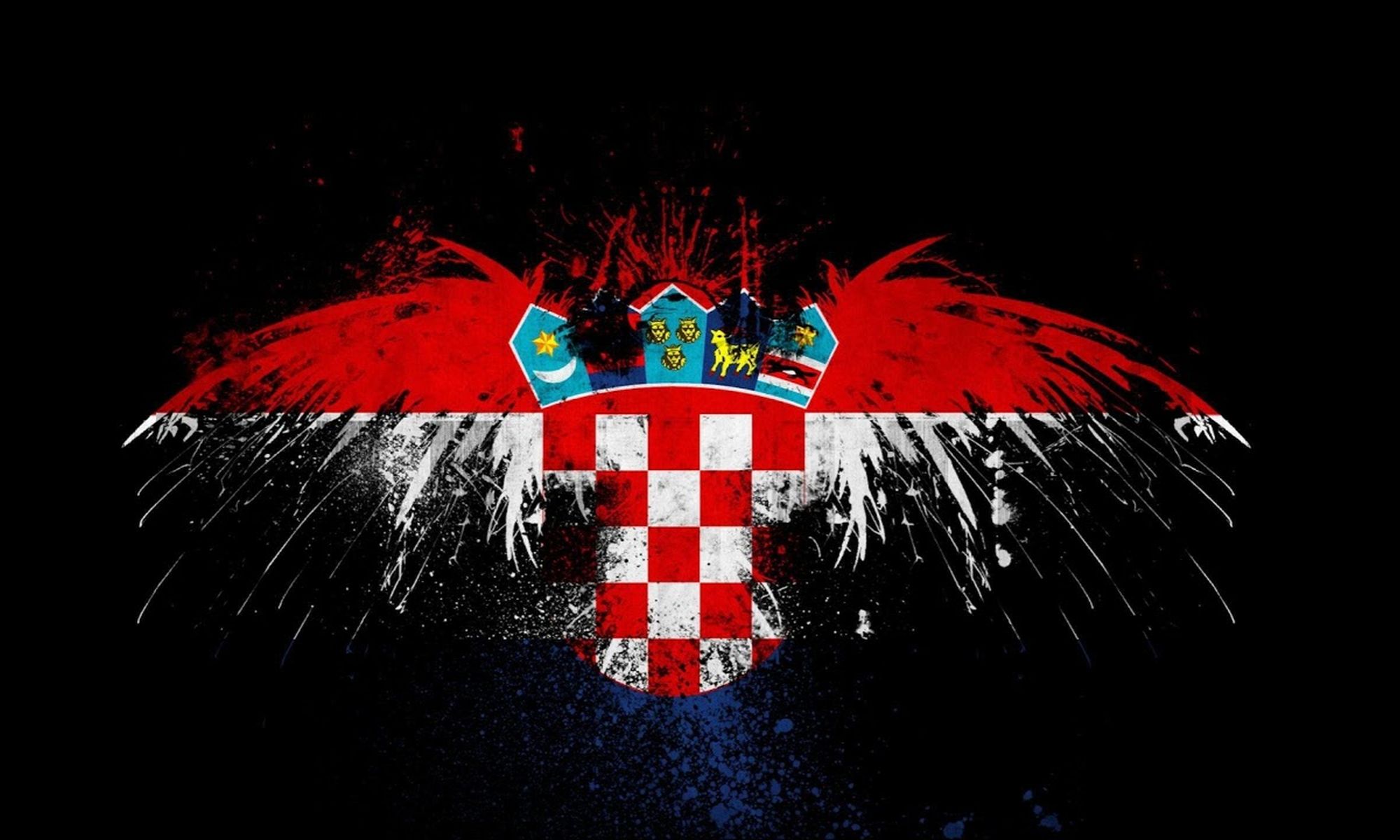
Constitution of Rights of the Croatian People
Preamble
We, the Croatian people, united in faith, heritage, and destiny, establish this Constitution of Rights so that no Croat, whether at home or abroad, shall ever be second-class in the land of their forefathers. We reject all forms of tyranny, dictatorship, and oppression. We choose not the Spartan model of cruelty, but the Christian model of compassion, justice, and mercy. We declare that our nation shall be a beacon of liberty, where the dignity of every Croatian soul is upheld.
Article I – Citizenship by Blood and Birth
Every person of Croatian blood, whether born in the homeland or abroad, is recognized as a rightful son or daughter of Croatia.
No Croat shall ever be denied citizenship, identity, or belonging in the Republic of Croatia.
Article II – Equality of All Croats
All Croats, regardless of birthplace, wealth, class, or creed, are equal before God, the law, and the nation.
No Croatian citizen shall be treated as second-class, nor suffer discrimination in their homeland.
Article III – Freedom of Speech and Conscience
The right of free speech shall not be infringed.
No Croat shall be punished for speaking truth, for defending their people, or for practicing their faith.
Freedom of thought, press, assembly, and peaceful protest are guaranteed.
Article IV – Protection of the Family and the Weak
The Republic shall defend the sanctity of family, marriage, and the upbringing of children.
No child of Croatia, however weak or sick, shall be cast aside or abandoned. The nation shall bind their wounds, heal their sorrows, and lift them up in dignity.
The elderly and infirm shall be honored, not discarded.
Article V – Faith and Morality
The Republic affirms the Christian moral heritage of its people.
Freedom of religion is guaranteed, but no government shall exalt cruelty, paganism, or tyranny over the law of love.
Article VI – The Right of Defense and Freedom
Every Croatian has the right to defend himself, his family, and his homeland.
The Republic shall never submit to foreign domination, nor permit Croats to be dispossessed of their land.
Article VII – Government of the People
The government of Croatia exists only by the consent of its people, and shall serve them in humility.
Power must never concentrate into dictatorship, tyranny, or oligarchy.
Leaders who betray the freedoms of Croats for foreign masters or selfish gain shall be removed and judged by the people.
Article VIII – Heritage and Unity
The Croatian language, culture, and history shall be preserved and taught to all generations.
Croats abroad are forever part of the Republic and entitled to full rights and participation in its future.
Article IX – Justice and Law
The law shall protect the weak as much as the strong, the poor as much as the rich.
No man or woman shall be above the law.
Punishments shall be just, never cruel or degrading.
Article X – Oath of Loyalty
Every leader of Croatia shall swear before God and people to uphold this Constitution of Rights, to bind the wounds of the broken, to defend liberty, and to never allow Croats to be treated as second-class in their own homeland.
Logline: The brutal fight for Scottish independence fractures the bond between the brilliant but pragmatic King Robert the Bruce and his fiercely loyal but increasingly unhinged younger brother, Edward, forcing them to confront whether the ends of freedom can ever justify their monstrous means.
Tone: A gritty, visceral, and psychological historical drama in the vein of The Outlaw King and The King, focusing on the complex cost of leadership and the corrosive nature of war on family.
Characters:
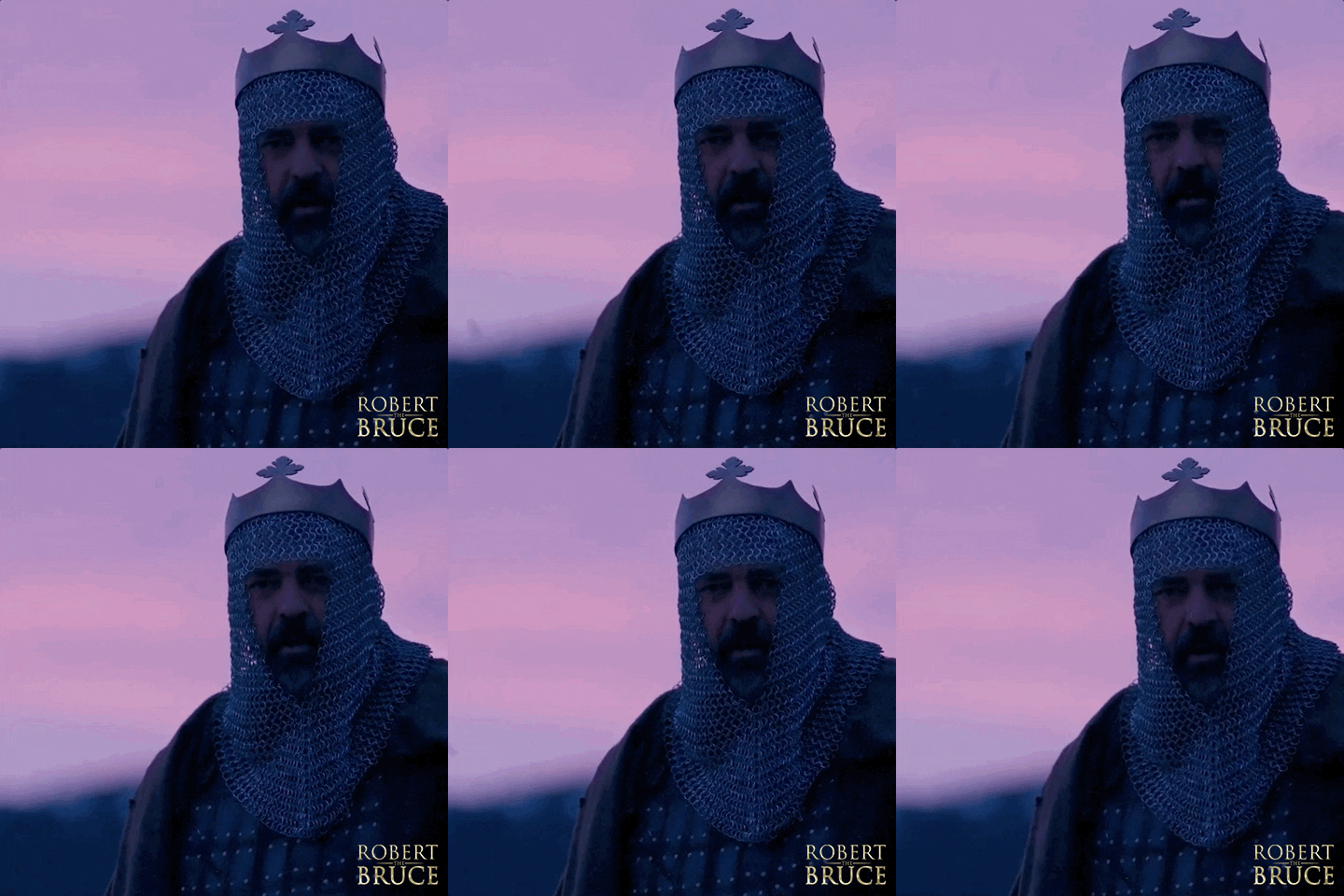
ROBERT THE BRUCE (CHRIS ARMSTRONG): In his 40s. The King of Scots. A strategic genius and a natural leader, but weighed down by the immense moral and political burden of kingship. He is pragmatic to a fault, often making cold calculations for the greater good. His goal is a stable, independent Scotland, but the path to it is staining his soul.
EDWARD BRUCE (JOE JUKIC): Late 20s/Early 30s. Robert’s younger brother. A formidable, fearless, and terrifyingly effective warrior. His loyalty to Robert and the cause is absolute, but it is fueled by a deep-seated rage and a thirst for glory that borders on the berserk. He is the unleashed id to Robert’s calculating ego.
ELIZABETH DE BURGH (to be cast): Robert’s wife. His emotional anchor and moral compass. Her captivity by the English is a constant source of pain and strategic weakness for Robert.
SIR JAMES DOUGLAS (to be cast): The “Black Douglas.” A loyal lieutenant to Robert. He shares Edward’s ferocity in battle but channels it with more control, serving as a contrast to Edward’s descent.
AYMER DE VALENCE (to be cast): The ruthless English commander, representing the relentless pressure of the opposition.
SYNOPSIS
ACT I: THE FRACTURED CROWN
Opening: 1306. The aftermath of Methven. Robert’s army is shattered, his family and allies captured or killed. He and a handful of survivors, including a bloodied but defiant Edward, flee into the wilderness. This is not a glorious beginning but a desperate, humiliating scramble for survival. We see the core dynamic: Robert is already thinking three moves ahead, despairing at the cost. Edward sees only the insult and burns for immediate, brutal retaliation.
As Robert rebuilds his campaign through guerrilla tactics (showing the famous spider scene not as inspiration, but as a moment of grim perseverance), Edward is his most effective weapon. He takes castles with audacious, reckless assaults that Robert’s more cautious commanders would never attempt. Edward’s bravery is legendary, but Robert begins to see the warning signs: a relish for violence that goes beyond necessity, a contempt for prisoners, a belief that fear is the only true currency.
The central conflict is established: Robert needs to win the peace, to be a king who can rule. Edward only knows how to win the war.
ACT II: THE HAMMER AND THE ANVIL
The stunning victory at Bannockburn is the brothers’ apex. Robert’s masterful strategy sets the trap, and Edward’s ferocious command of a schiltron or the cavalry charge is the hammer that breaks the English army. They are heroes, united in triumph. Scotland is, for the moment, free.
But victory exposes their rift. Robert, now a true king, must court diplomacy. He seeks recognition from the Pope and a lasting treaty with England. Edward sees this as weakness. To him, the enemy is humiliated but not destroyed. He argues for invading England itself, for carving out a kingdom of fire and blood.
Frustrated and sidelined by Robert’s politics, Edward’s violent impulses find a new outlet. He leads punitive raids into England that are so savage—massacring civilians, burning crops to the bedrock—that they become counterproductive, hardening English resistance and embarrassing Robert’s attempts to appear a legitimate sovereign. Their arguments become explosive. Robert is trying to build a nation; Edward is only interested in destroying an enemy.
ACT III: A KINGDOM OF ASH
To channel Edward’s destructive energy away from undermining his diplomacy, Robert makes a fateful decision. He supports Edward’s ambition to open a second front by invading Ireland, to forge a Gaelic alliance and squeeze the English from the west. Robert gives his brother an army and a title: High King of Ireland.
At first, it works. Edward is in his element: conquest. He wins stunning victories against overwhelming odds. But his rule is one of terror. He alienates the very Irish allies he was sent to secure through his brutality and arrogance. Reports filter back to Robert of massacres and impaled bodies lining the roads. Robert is horrified, but he is too far away and too busy securing his own borders to intervene effectively. He is complicit.
The film culminates in the Battle of Faughart (1318). Edward, outnumbered and refusing to wait for reinforcements, charges headlong into the English/Irish army. It’s not a tactical decision; it’s a suicidal act of hubris. He is killed, his body hacked to pieces.
Final Scene: Robert receives the news. There is no grand eulogy. The silence in his council chamber is deafening. He looks not like a king who has lost a troublesome general, but like a brother who has lost his other half—the brutal, monstrous, but undeniably loyal part of himself that he first unleashed and then failed to control. He won his kingdom, but the cost is etched permanently on his face. The final shot is of Robert alone on a cliff, staring out at the sea towards Ireland, the weight of his crown, and his grief, finally and utterly crushing.
KEY THEMES
The Duality of Freedom: Is freedom won through statesmanship or savagery? The film argues it requires both, and that the latter inevitably corrupts the former.
Fraternal Bond vs. National Duty: The intense love and rivalry between brothers, and the tragedy when one’s duty to a nation requires the sacrifice of his brother’s soul and life.
The Cost of Kingship: Robert’s arc is about the terrible loneliness of leadership and the morally compromising decisions required to build something lasting.
VISUAL STYLE
Gritty and Naturalistic: No polished armour. Mud, blood, rain, and the harsh beauty of the Scottish and Irish landscapes.
Intimate Battle Choreography: Focus on the chaotic, personal, and terrifying nature of medieval combat. The camera stays close to Robert and Edward, contrasting Robert’s tactical awareness with Edward’s brutal, efficient killing.
Contrasting Palettes: Scotland is all muted greens, greys, and browns. The Irish campaign is shot with a bleaker, more desaturated palette, reflecting the doomed nature of the enterprise.