The Princess of Calabria

TITLE: The Princess of Calabria

GENRE: Crime Drama / Political Thriller

LOGLINE:
In the shadow of Italy’s most feared crime syndicate, a reformed Calabrian fixer teaches the dyslexic daughter of a mafia boss to read — only for her to become a legal secretary whose quiet brilliance helps bring down Italy’s most untouchable political and criminal figures, culminating in the arrest of Silvio Berlusconi.


ACT ONEBlood and Letters

Opening Scene:
Coastal Calabria, early 2000s. Giuseppe “Juco” Rossi (nicknamed Juco for short), a wiry, weathered man in his 40s, watches from a cliff as smugglers unload crates in the moonlight. He knows the operation inside out — he used to run it. But prison changed him. Now he works at a tiny public library, keeping his head down.

One day, a black Maserati pulls up. Out steps Rosanna Tyler, 19, half-Calabrian, half-English, the daughter of Antonio Tyler — a feared ’Ndrangheta capo. Rosanna has been pulled from school countless times due to “learning problems” and family scandals. Her father orders Juco to teach her to read, thinking literacy might help her with “legitimate” bookkeeping for the family.

Juco quickly realizes she has severe dyslexia. Instead of shaming her like others did, he uses colored overlays, gentle patience, and streetwise metaphors from mafia life to make the words click. Their lessons form a delicate friendship, one that balances on the edge of danger.


ACT TWOReading Between the Lies

Rosanna blossoms under Juco’s mentorship. She starts reading novels, legal codes, and eventually, court transcripts. Her father sees her as a sharper tool for the family; Juco sees her as a way to atone for his past.

During one lesson, Juco slips her a book banned by her father: an investigative journalist’s exposé on the ’Ndrangheta, detailing secret deals between mafia bosses, business tycoons, and Rome’s political elite. Rosanna is horrified to see her family’s name in its pages.

When her father is arrested in a minor sweep, Rosanna takes a job as a low-level clerk in a Naples law office. She discovers she can spot patterns others miss — hidden clauses, falsified contracts, laundering schemes — simply because she’s learned to look at documents differently from years of struggling with words.

Quietly, she begins passing information to a small anti-mafia task force led by prosecutor Maria Lupo, who’s been chasing a larger target: the Propaganda Due network, Italy’s most secret and dishonorable lodge of power brokers, which includes political kingmakers and even the sitting Prime Minister, Silvio Berlusconi.


ACT THREEThe Fall of the House

The danger escalates. Juco is nearly killed in a staged “road accident” meant as a warning. Rosanna’s own cousin betrays her identity to the family. But the prosecutor protects her under a witness-assistance program, moving her to Rome under a new name.

There, Rosanna decodes a labyrinth of offshore accounts linking ’Ndrangheta drug profits to construction kickbacks, TV media empires, and political bribery. Every breadcrumb points to the same man at the top.

Final Sequence:
In a tense press conference, Maria Lupo announces arrest warrants. Police swarm a lavish villa in Sardinia. Cameras capture a defiant yet shaken Silvio Berlusconi being led away in handcuffs, denying everything.

Back in Calabria, Juco watches the footage on a dusty old TV in his library. Rosanna, now free from witness protection, visits him. She hands him a book — The Count of Monte Cristo — with a colored overlay still tucked inside.

Rosanna: “You taught me to read, Juco. Now I’m teaching Italy to see.”

They sit in silence as the waves crash below, knowing the war against corruption is far from over — but today, a giant has fallen.


TONE & STYLE:
Think Gomorrah meets Spotlight — gritty realism mixed with political intrigue. Scenes alternate between rural Calabria’s olive groves and Rome’s marble corridors of power. The colored overlays become a visual motif — flashes of green, blue, yellow washing over documents and faces during key revelations.

THEMES:

  • Literacy as liberation and rebellion
  • The invisible power of women in dismantling organized crime
  • The tension between blood loyalty and moral courage
  • The slow grind of justice against entrenched corruption

ENDING FEEL:
Bittersweet victory — justice is real, but it costs blood, exile, and the destruction of family ties.
1901 The Movie: Tower Power

Title: 1901
Genre: Historical Drama / Tech Thriller
Starring:

  • Goran Visnjic as Nikola Tesla
  • Tom Cruise as Thomas Edison
  • Anthony Hopkins as J.P. Morgan

TREATMENT:

LOGLINE:
In the dawn of the 20th century, as the world braces for a new era of electricity, innovation, and empire, visionary inventor Nikola Tesla battles powerful rival Thomas Edison and financier J.P. Morgan in a high-stakes war of technology, control, and legacy.


ACT I – THE CURRENT WAR

The film opens in New York City, 1901, amidst the clanging steel and electric hum of a rapidly industrializing world. Serbian-born genius Nikola Tesla (Goran Visnjic) is isolated, eccentric, and destitute — living in a hotel room with pigeons and unfinished blueprints. Flashbacks show his rise: the immigrant prodigy who once lit up the Chicago World’s Fair, now a forgotten man.

Meanwhile, Thomas Edison (Tom Cruise) is in his prime — rich, famous, and ruthless. He’s using Direct Current (DC) to power cities, even as Tesla’s Alternating Current (AC) system proves superior. Yet Edison refuses to yield, launching public smear campaigns and electrocutions of animals to sway opinion.

Enter J.P. Morgan (Anthony Hopkins) — the titanic banker and industrialist. Cold, cunning, and with a towering presence, Morgan finances Tesla’s early innovations, only to turn on him when Tesla proposes free wireless energy from his Wardenclyffe Tower. Morgan scoffs: “If anyone can draw power from the air, where do we put the meter?”


ACT II – WARDENCLYFFE AND THE WIRELESS DREAM

Tesla races to complete his Wardenclyffe facility on Long Island — a futuristic tower meant to transmit energy and information across the globe. He dreams of a world with no borders, no wires, and no war. Goran Visnjic brings emotional depth to Tesla’s quiet madness and genius.

Edison and Morgan, threatened by this utopian vision, ally to sabotage Tesla. A secret committee of industrialists calls Tesla’s project “the greatest threat to capitalism.” Newspapers publish stories of Tesla as a dangerous madman.

Tesla’s experiments grow stranger: death rays, earthquake machines, and cryptic claims of signals from Mars. He is either on the brink of world-shaping discovery — or insanity.


ACT III – THE COLLAPSE AND THE LEGACY

Morgan pulls funding. Edison secures government contracts. The tower is dismantled. Tesla is evicted from his lab and reduced to speaking at clubs about “vibrational frequencies” and “invisible waves.” He feeds pigeons, ignored by the world he helped create.

But something remains. In a secret final experiment, Tesla transmits a brief pulse of power across the Atlantic — lighting a bulb in Morocco. The scene is mythic, near-spiritual. He smiles. He’s proven it can be done.

The final scenes flash-forward to the 21st century — wireless tech, drones, satellites, clean energy — Tesla’s dreams made real. A child opens a physics textbook. The name “Tesla” is on the cover.


FINAL IMAGE:

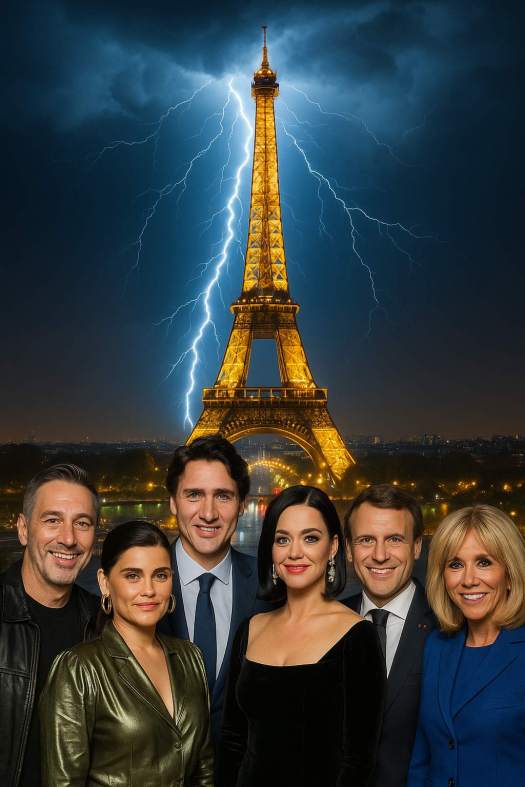
A long shot of the Eiffel Tower, lit at night. Lightning strikes. Somewhere, unseen, the current still flows.


Tone & Style:

A blend of The Prestige, There Will Be Blood, and Oppenheimer. Real science. Real rivalry. Real madness. Moody cinematography, dark Tesla coil visuals, and industrial-age dread. The moral question: who owns the future — visionaries, businessmen, or no one?


Tagline:
“He lit the world… but couldn’t pay his own light bill.”


Let me know if you’d like a poster, screenplay pages, or dialogue samples.

FINAL SCENE: 1901 – Epilogue

INT. DARKENED HOTEL ROOM – NEW YORK CITY – NIGHT

Nikola Tesla (Goran Visnjic), gaunt and alone, stares at the last of his pigeons out the window. On the desk, blueprints of machines decades ahead of their time — wireless energy, antigravity ships, particle beams — scatter like abandoned dreams.

A single bulb flickers above. Then dies.

Tesla closes his eyes.

TESLA (V.O.)
The present is theirs. The future, for which I really worked, is mine.

A deep rumble builds…


EXT. PARIS – NIGHT – 2025

The Eiffel Tower stands glowing in the distance, but a storm is brewing overhead.

Suddenly — a bolt of lightning crashes into the top of the tower.

The entire skyline of Paris surges with electricity — a city powered by Tesla’s forgotten vision.

Standing at the base of the Eiffel Tower, smiling in awe, are:

  • Joe Jukic, in a black leather jacket
  • Nelly Furtado, in a futuristic emerald dress
  • Justin Trudeau, in a navy blue suit
  • Katy Perry, radiant in a velvet gown
  • Emmanuel Macron, proud, and
  • Brigitte Macron, elegant and calm

They look up as the tower surges with power — not just electricity, but hope.

In this moment, the world realizes Tesla’s dream wasn’t madness — it was prophecy.

A caption fades in:

“Dedicated to Nikola Tesla — the man who saw the future.”


CLOSING CREDITS

As the credits roll, the soundtrack features an original song by Nelly Furtado and Joe Jukic called “Lightning for the People” — a blend of classical strings, pulsing synths, and poetic lyrics about free energy, stolen dreams, and a future reclaimed.

Screenplay 1915 – Armenia

Title: The False Messiah
Written by: Joseph C. Jukic


Act 1: The Rise of Sabbatai Zvi

Opening Scene:
1666, Salonica (modern Thessaloniki). The bustling streets are alive with the chatter of merchants, the clinking of coins, and the hum of prayer. The camera pans to Sabbatai Zvi, a striking figure with piercing eyes and a commanding presence, addressing a crowd of Jewish followers in the marketplace.

Sabbatai Zvi (to the crowd):
“The time has come! The Messiah walks among you, and I am He. Together, we shall return to Zion, to reclaim the Promised Land.”

Narration (Voiceover):
“Sabbatai Zvi’s proclamation electrified the Jewish world. But beneath his charisma lay a dangerous undercurrent of ambition and secrecy.”

Cut to: A shadowy meeting in a dimly lit room. Emmanuel Carraso, a member of the Salonika Lodge, listens intently to a group of influential figures.

Carraso:
“This man, Zvi, is stirring the hearts of the people. But his delusions of grandeur could destabilize the region. We must observe him closely.”

Young Turk Leader 1:
“And what of our own plans? The Ottoman Empire is weak. The time to act is near.”

Carraso:
“Patience. The Messiah’s rise may serve as a useful distraction.”


Act 2: The Young Turks and the Armenian Question

Scene: The Salonika Lodge
1908. The camera reveals a secret meeting of the Young Turks, including figures like Talaat Pasha, Enver Pasha, and Djemal Pasha. Carraso, now an elder statesman, addresses the group.

Carraso:
“Gentlemen, the empire is crumbling. The Armenians, with their aspirations for independence, are a threat to our unity. If we are to build a modern Turkey, sacrifices must be made.”

Talaat Pasha:
“Sacrifices? You mean eradication.”

Carraso (hesitant):
“Call it what you will. The end justifies the means.”

Enver Pasha:
“And the Jews of Salonica? Will they support us?”

Carraso:
“They will, so long as their businesses and lives remain untouched. Focus on the Armenians.”


Act 3: The Messiah and the Massacre

Scene: A Parallel Timeline
The story intercuts between Sabbatai Zvi’s rise in the 17th century and the horrors of the Armenian Genocide in the early 20th century. Zvi’s followers celebrate his declaration as the Messiah, while Armenians flee their homes, chased by Ottoman soldiers.

Narration (Voiceover):
“The Young Turks, inspired by their vision of a modern, secular Turkey, unleashed a campaign of terror. Meanwhile, the false Messiah’s promises unraveled, as Zvi was forced to convert to Islam under threat of death.”

Cut to: Emmanuel Carraso, in his final days, reflecting on his role in history.

Carraso (to himself):
“I thought I could control the tides of history. But we were all swept away—by ambition, by fear, by the blood we spilled.”


Act 4: A Reckoning

Scene: A Modern-Day Reflection
The camera shifts to present-day Salonica, where a historian uncovers Carraso’s hidden diaries. The pages reveal his secrets: his involvement in the Young Turks, his complicity in the Armenian Genocide, and his observations of Sabbatai Zvi.

Historian (reading aloud):
“The Messiah was a man, flawed and fallible, just like the rest of us. And we, the so-called architects of a new world, were no better.”

Closing Scene:
The camera pans over the ruins of an Armenian church, the bustling streets of modern Istanbul, and the remnants of Zvi’s synagogue in Salonica. A voiceover concludes:

Narration (Voiceover):
“History is written by the victors, but the truth lingers in the shadows, waiting to be uncovered.”

Fade to Black.
Title Card: “Dedicated to the victims of false prophets and human ambition.”

The End.